
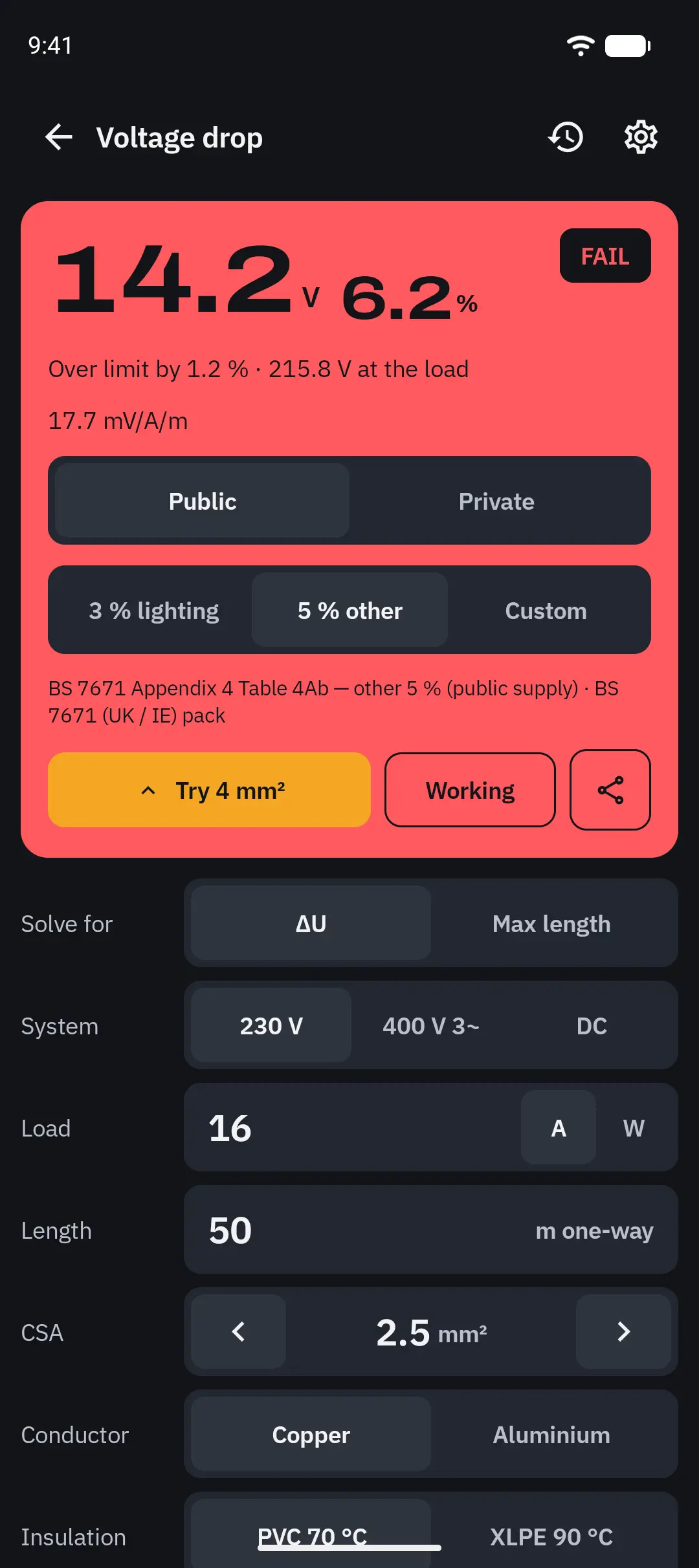
Pass or fail, not a bare number.
Every result is checked against the limit in your pack — NEN 1010, BS 7671, DIN VDE, NF C 15-100 or IEC typical — and the rule is cited under the number.
For electricians and installers — UK, Ireland and Europe
Voltage drop, cable size and Iz — checked against your national limit, with the rule cited and the working shown. Offline. Pay once.
Free to use. Pro is a single €9.99 unlock. No account, no subscription.
Every result is checked against the limit in your pack — NEN 1010, BS 7671, DIN VDE, NF C 15-100 or IEC typical — and the rule is cited under the number.
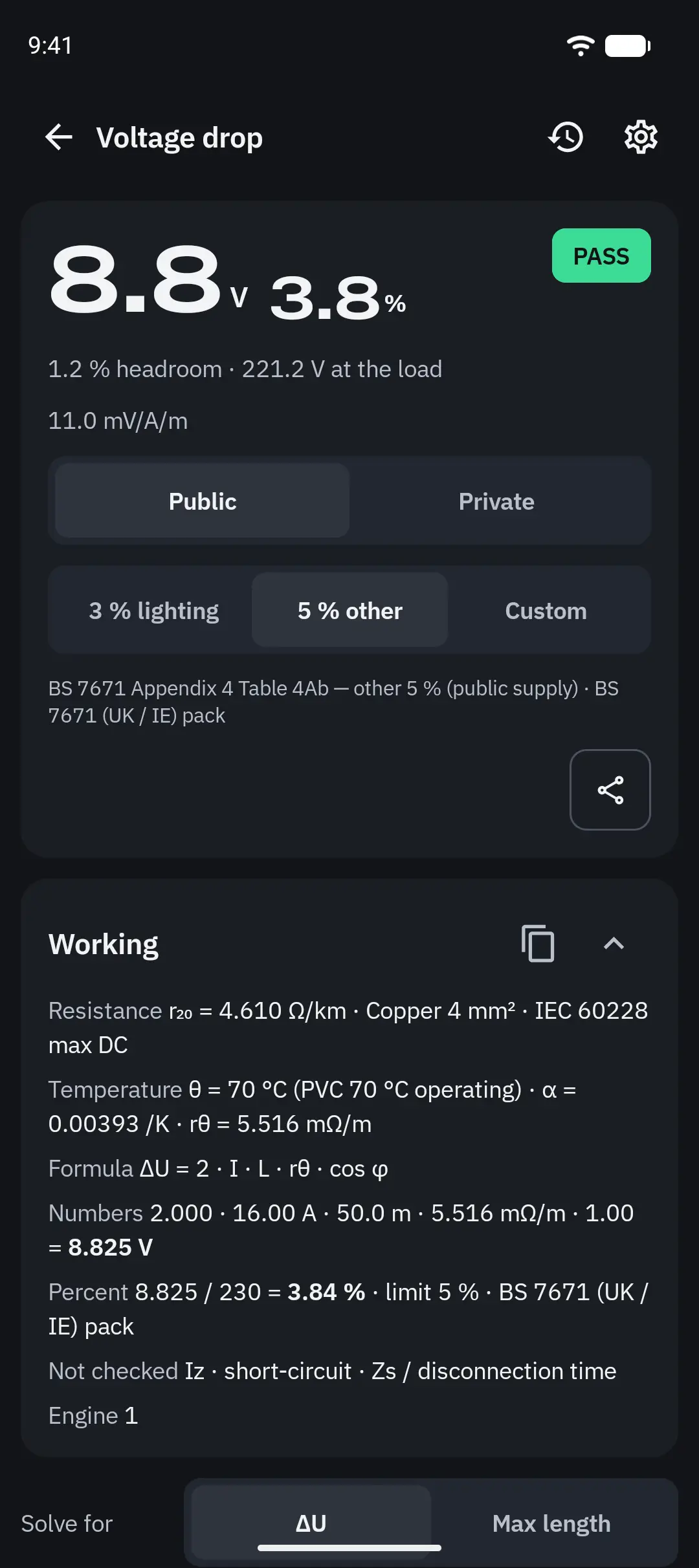
Resistance at operating temperature, the formula, every input, and the list of what was not checked. A senior can audit a junior from the phone.
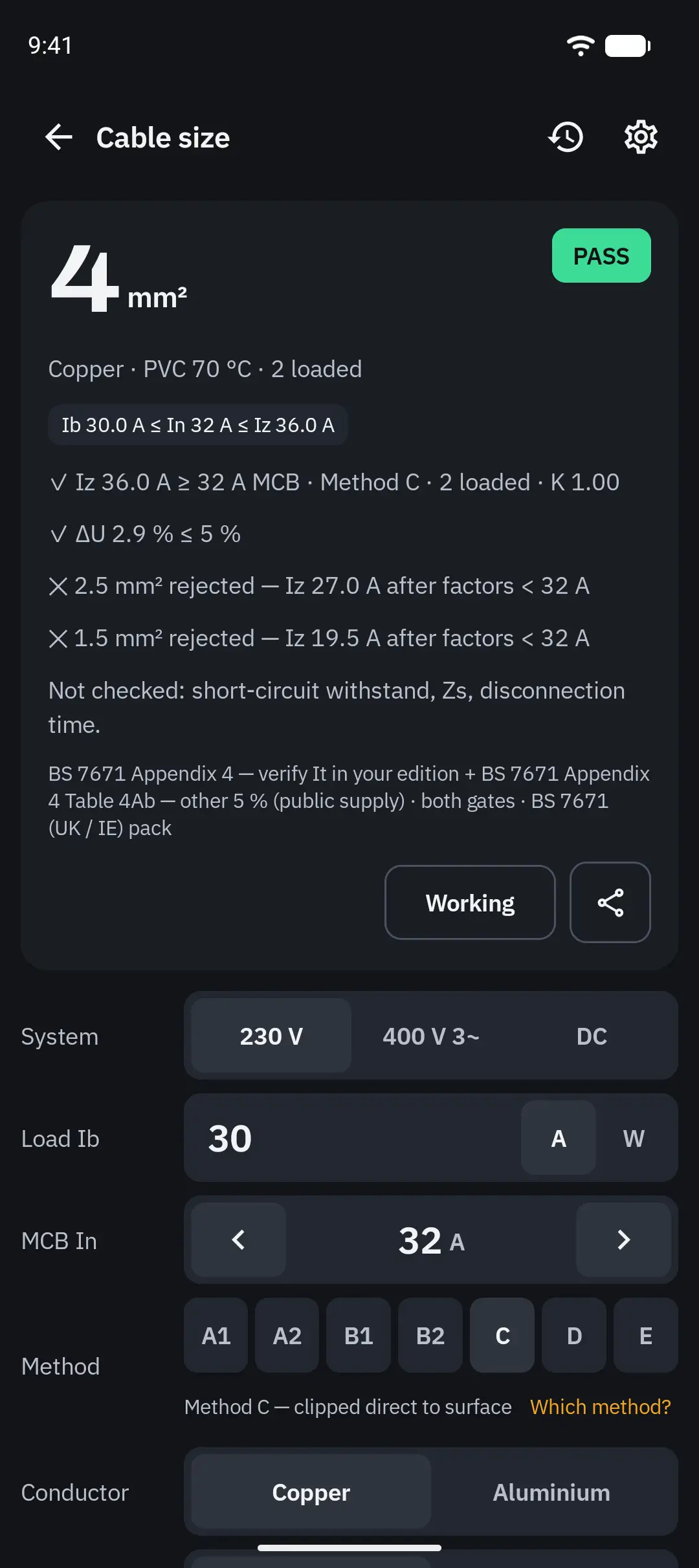
Iz after ambient, grouping and insulation factors, then voltage drop. It tells you which size was rejected and why.
| Free | Pro · €9.99 once | |
|---|---|---|
| Voltage drop | Typed cross-section, custom limit, one "size up" on a FAIL, solve for max length | Find the smallest size automatically, AC and DC |
| Ampacity | Your own Iz from the book, checked against the load | Bundled tables; ambient, grouping and insulation factors; Iz bookmarks |
| Cable size | Inputs live, number locked | Two gates — Iz after factors and voltage drop — with the rejected sizes and why |
| National packs | All five | All five |
| Pipe size & loss | Required diameter and the velocity in your pipe | Catalogue pick; pressure loss with fittings |
| Heat loss | With your U-values | Construction presets and a radiator pick |
| History & share | Last 5 · share as text | Last 50 · PDF with the working · CSV export |
If you type it or pick it, it's free. If the app looks up a table or walks the sizes for you, it's Pro — €9.99, once.
Here's exactly what the numbers are and what we don't check.